Amortization Definition, Amortization of Loan and Assets
Content
For intangible assets, knowing the exact starting cost isn’t always easy. You may need a small business accountant or legal professional to help you. Of the different options mentioned above, a company often has the option of accelerating depreciation. This means more depreciation expense is recognized earlier in an asset’s useful life as that asset may be used heavier when it is newest. Tangible assets can often use the modified accelerated cost recovery system . Meanwhile, amortization often does not use this practice, and the same amount of expense is recognized whether the intangible asset is older or newer. Loan cost amortization refers to spreading the cost of a loan over its life.
- The GoCardless content team comprises a group of subject-matter experts in multiple fields from across GoCardless.
- Goodwill, which are intangible assets acquired via merger or acquisition that cannot be attributed to other income-producing assets, and intangible assets with indefinite lifespan are not amortized.
- Once these figures are available, companies can put them in the journal entries for loan amortization.
- Air and Space is a company that develops technologies for aviation industry.
- For loans, it is similar, allowing companies to decrease the book value of certain debts.
The definition of depreciate is “to diminish in value over a period of time”. Amortization and depreciation differ in that there are many different depreciation methods, while the straight-line method is often the only amortization method used. Companies can also calculate the interest on the loan using the following formula. Shared Economy Tax has been serving the small business community for years, so we know all about the hidden deductions that can help you save. Get started today with a one-on-one strategy session with a certified tax pro from Shared Economy Tax. We can answer all of your toughest tax questions, and there’s absolutely no obligation for scheduling a chat.
Step 2: Calculate the period interest rate.
The total payment stays the same each month, while the portion going to principal increases and the portion going to interest decreases. In the final month, only $1.66 is paid in interest, because the outstanding loan balance at that point is very minimal compared with the starting loan balance. Amortization can be calculated using most modern financial calculators, spreadsheet software packages , or online amortization calculators.
The term amortization is used in both accounting and in lending with completely different definitions and uses. The elements of the above formula for loan amortization are as below. BlackLine partners with top global Business Process Outsourcers and equips them with solutions to better serve their clients and achieve market-leading automation, efficiencies, and risk control. By outsourcing, businesses can achieve stronger compliance, gain a deeper level of industry knowledge, and grow without unnecessary costs.
Examples of Intangible Assets
So, instead of the outstanding principal balance decreasing, it is increased by the unpaid interest instead. Lenders do not want negative amortization and will likely consider the borrower in default if it persists. For personal finance, an example of amortization is the determination of fixed mortgage payments that are designed to completely pay off a mortgage loan in say 15 or 30 years. For https://simple-accounting.org/ example, you may pay rent to your vendor for one year in a single payment. And, you will not account the whole rent value during the month of payment, instead you’d split it into 12 parts and each part would be accounted in each subsequent months. Not all loans are designed in the same way, and much depends on who is receiving the loan, who is extending the loan, and what the loan is for.
What is amortization expense vs depreciation?
Amortization is the method that is used to decrease the cost of the asset over time, while depreciation is the loss in value of the asset over time. This understanding helps in better understanding the financial implications of the purchase and saving time, effort, and money.
Accounting and tax rules provide guidance to accountants on how to account for the depreciation of the assets over time. Interest costs are always highest at the beginning because the outstanding balance or principle outstanding is at its largest amount. It also serves as an incentive for the loan recipient to get the loan paid off in full. As time progresses, more of each payment made goes toward the principal balance of the loan, meaning less and less goes toward interest.
What Does Amortization Mean for Intangible Assets?
Amortization and depreciation are the two main methods of calculating the value of these assets, with the key difference between the two methods involving the type of asset being expensed. In addition, there are differences in the methods allowed, components of the calculations, and how they are presented on financial statements. Amortization expense is the write-off of an intangible asset over its expected period of use, which reflects the consumption of the asset. This write-off results in the residual asset balance declining over time.
- Also, they can be calculated differently by different companies, thereby obscuring comparisons between one company’s fundamentals and another’s.
- Amortization also applies to intangible assets, where it spreads their costs over the useful life.
- Amortization is an accounting technique used to distribute asset value or loan principal over time.
- Using the straight-line method, the company’s annual depreciation expense for the equipment will be $10,000 ($100,000/10 years).
- To sustain timely performance of daily activities, banking and financial services organizations are turning to modern accounting and finance practices.
Amortization is used in measures such as EBITDA, which stands for earnings before interest, taxes, depreciation and amortization. For EBITDA, depreciation and amortization are among the items added back to net income to show investors how a company is achieving profit primarily on an operating basis. In mortgage-style amortization, for that same $10,000 loan with an annual interest rate of 6 percent, the interest payments initially will be higher than the principal.
In the example above, the loan is paid on a monthly basis over ten years. Over time, after the series of payments, the borrower gradually reduces the outstanding principal. Many examples of amortization in business relate to intellectual property, such as patents and copyrights. Amortizing the value of an intangible asset can be spread over years or months.
- The resulting number is your annual amortization expense, and you can deduct this total as an expense every year until the asset’s value goes to zero.
- It is also possible for a company to use an accelerated depreciation method, where the amount of depreciation it takes each year is higher during the earlier years of an asset’s life.
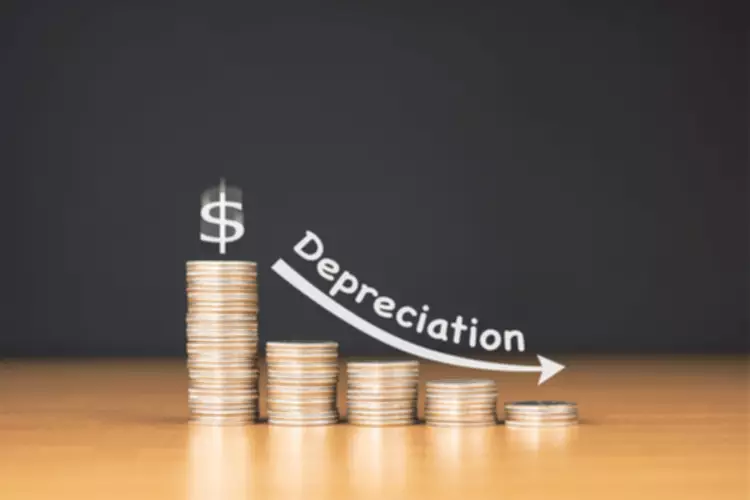
- To depreciate means to lose value and to amortize means to write off costs over a period of time.
- Record amortization expenses on the income statement under a line item called “depreciation and amortization.” Debit the amortization expense to increase the asset account and reduce revenue.
- After 15 months, $15,000 of principal will have been paid and $345,000 of principal will therefore remain.
Just like the straight line method to calculate the depreciation expense, the straight line method is used to calculate the amortization expense. Let’s say a company purchases a new piece of equipment with an estimated useful life of 10 years for the price of $100,000. Using the straight-line method, the company’s annual depreciation expense define amortization expense for the equipment will be $10,000 ($100,000/10 years). This is important because depreciation expenses are recognized as deductions for tax purposes. It is also possible for a company to use an accelerated depreciation method, where the amount of depreciation it takes each year is higher during the earlier years of an asset’s life.